
Vietnam hosts Russian naval task force amid shifting tides in South China Sea
HANOI, Oct 17 – Vietnam’s strategic positioning in the contested waters of the South China Sea came into sharp relief this week as a Russian naval task force anchored in Da Nang, marking a significant deep-sea port call that underscores fresh realignments among major powers in Southeast Asia.
The flotilla—comprising the frigate Marshal Shaposhnikov, corvette Gremyashchy and support tanker Boris Butoma—entered Vietnamese waters on Oct. 13, presenting the port call as a “friendly visit” aimed at naval diplomacy and cooperation. Vietnamese and Russian naval authorities are set to engage in joint exercises and port calls, and Russian sailors will tour local landmarks during their stay.
The deployment carries multiple symbolic and strategic implications. Vietnam has long balanced relations with Russia, China and the United States in its defense planning, historically relying on Russian arms imports while more recently expanding military ties with the U.S. and enhancing cooperation with ASEAN partners. The arrival of a modern Russian naval contingent illustrates Moscow’s intent to maintain influence in Southeast Asia and to counterbalance U.S. presence in the Indo-Pacific.
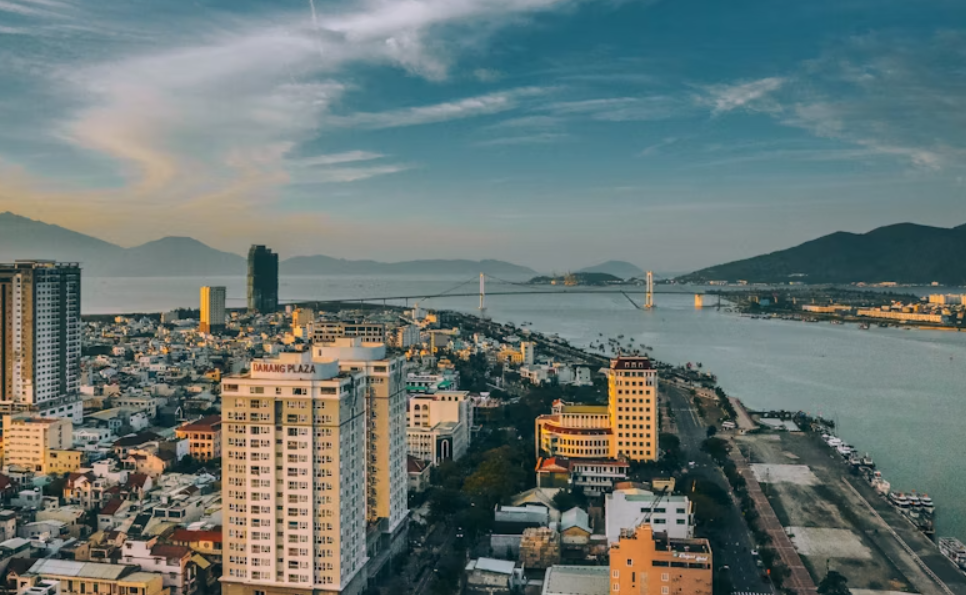
For Hanoi, the visit signals both opportunity and risk. The Vietnamese government has sought to position the country as a rising logistics and trade hub, capitalising on shifting supply chains and digital corridor strategies. Recent commentary describes Vietnam as “stepping into the spotlight as a potential hub for the next generation of trade corridors.” Port access and naval facility agreements offer Vietnam leverage—but also diplomatic tightropes.
Vietnam’s external posture also reflects internal political dynamics. The National Assembly is convening for its final session of the year beginning Oct. 20, where personnel changes at the highest levels—state president, prime minister, parliamentary chairs—are on the agenda. Such transitions may affect strategic continuity in foreign and defense policy.
Regional analysts are watching closely. The South China Sea remains a theatre of contestation among claimants including China, Vietnam, Malaysia and the Philippines. The presence of a Russian task force near Vietnamese territory could heighten deterrence signals, providing Hanoi room to manoeuvre amid increasing Chinese assertiveness.
Still, the operation is framed by softer messaging: the announced focus of potential exercises includes humanitarian assistance, disaster relief, and cooperation in maritime security. Beijing in recent years has promoted similar joint exercises with regional states—part of its broader strategy to bind Southeast Asian militaries to Chinese goodwill narratives.
The presence of a Russian task force near Vietnamese territory could heighten deterrence signals, providing Hanoi room to manoeuvre amid increasing Chinese assertiveness.
How deeply Vietnam will anchor this Russian naval incursion remains to be seen. Should Hanoi grant basing, logistics or repair rights, the decision would reverberate across ASEAN, potentially drawing criticism or strategic pressure from Washington and its allies. On the other hand, declining utility to Russia could upset Moscow, testing until how far Vietnam can calibrate “strategic independence” in a region increasingly shaped by superpower maneuvering.
As ASEAN leaders prepare to gather in Kuala Lumpur later this month, signals from Vietnam’s foreign and defense moves will be scrutinised—both by capitals in Southeast Asia and by external powers seeking influence along contested sea lanes. Vietnam’s ability to maintain balance while attracting infrastructure, trade and strategic partnerships may define the next chapter of its geopolitical emergence.
References
- Russia naval call to Vietnam, friendly visit narrative Newsweek+2Newsweek+2
- Vietnam’s position as emerging trade corridor hub vietnamnews.vn
- Vietnam National Assembly personnel agenda Reuters
- China-Malaysia joint drills, regional maritime cooperation context Reuters